Restored Landscape, Shared Future
A One-of-a-kind Place in Napa County, CA
An Irreplaceable Place
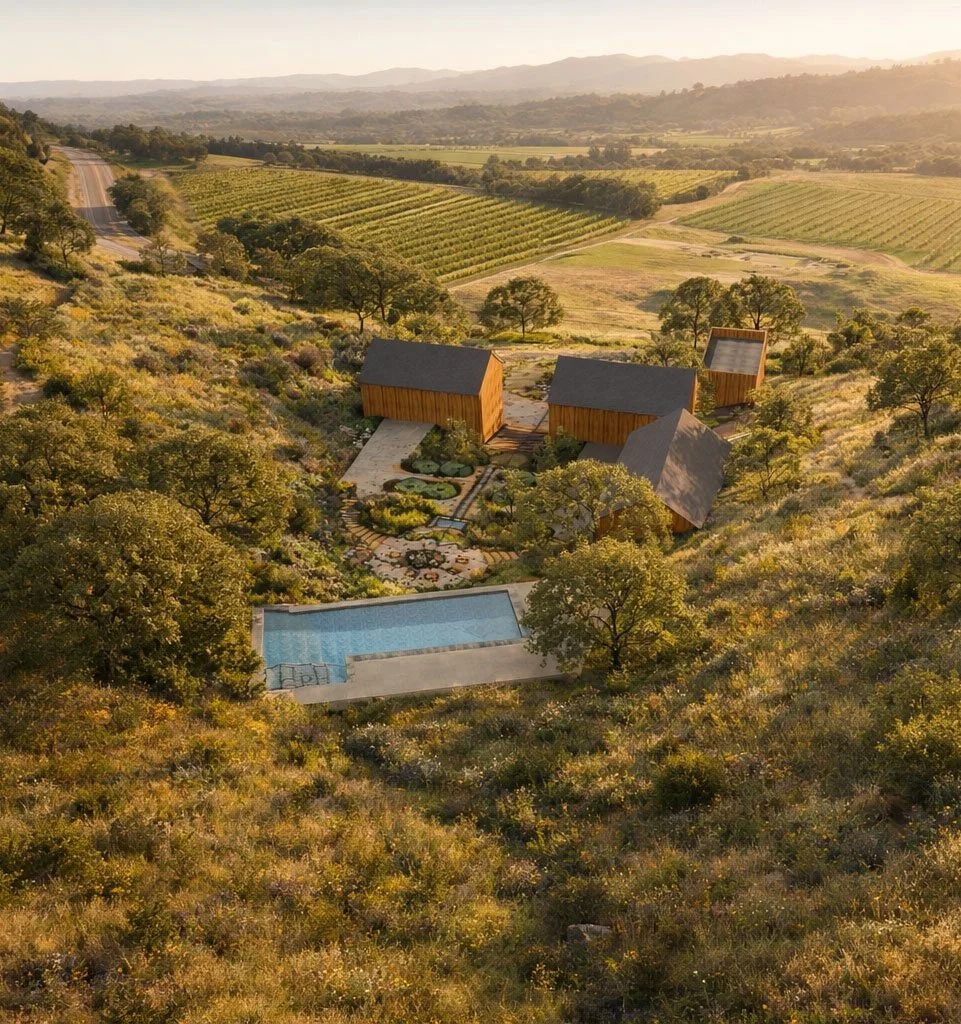
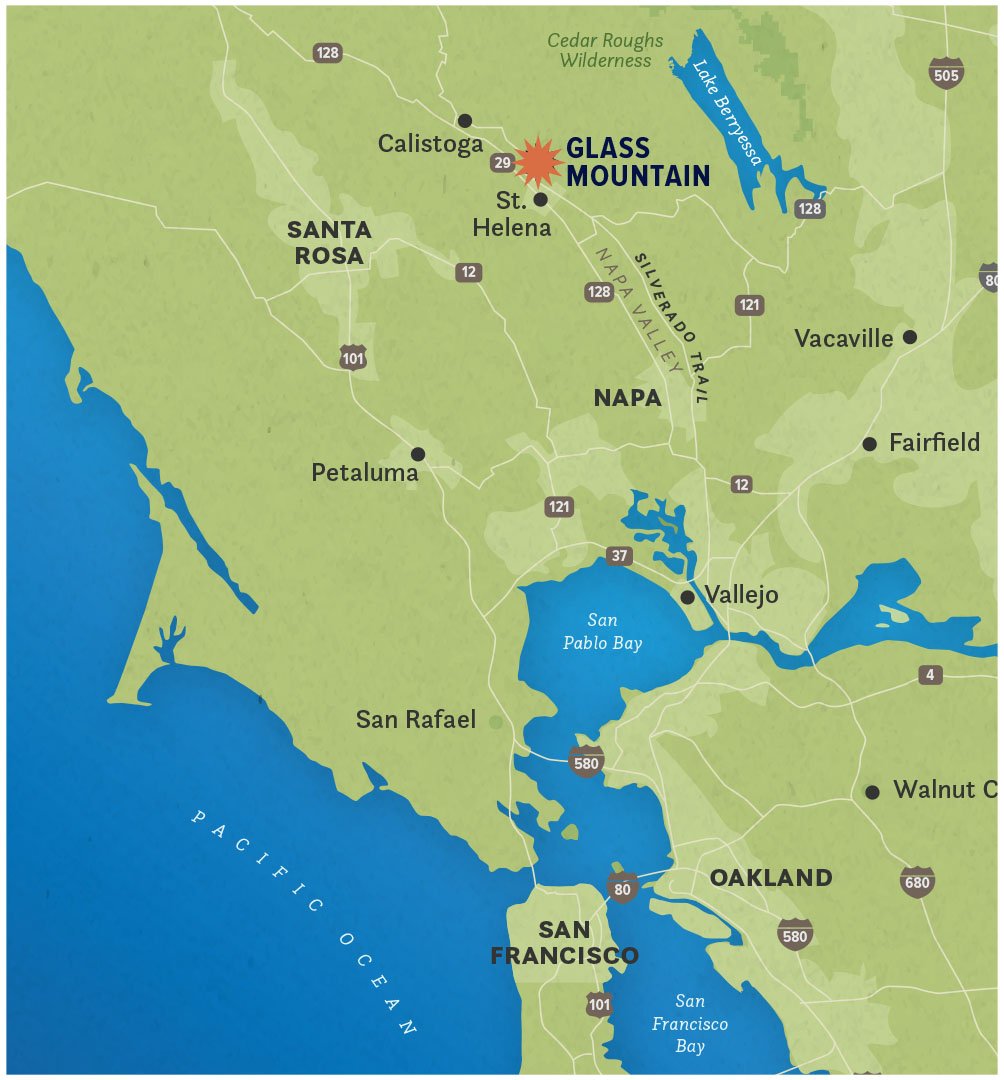
Welcome to Glass Mountain. The views run twenty miles on a clear morning, across the valley floor to the Mayacamas, Mt St. Helena, and beyond. The soil is volcanic, still glittering with obsidian shards that Wappo people worked into tools for seven thousand years before anyone called this place Napa Valley.
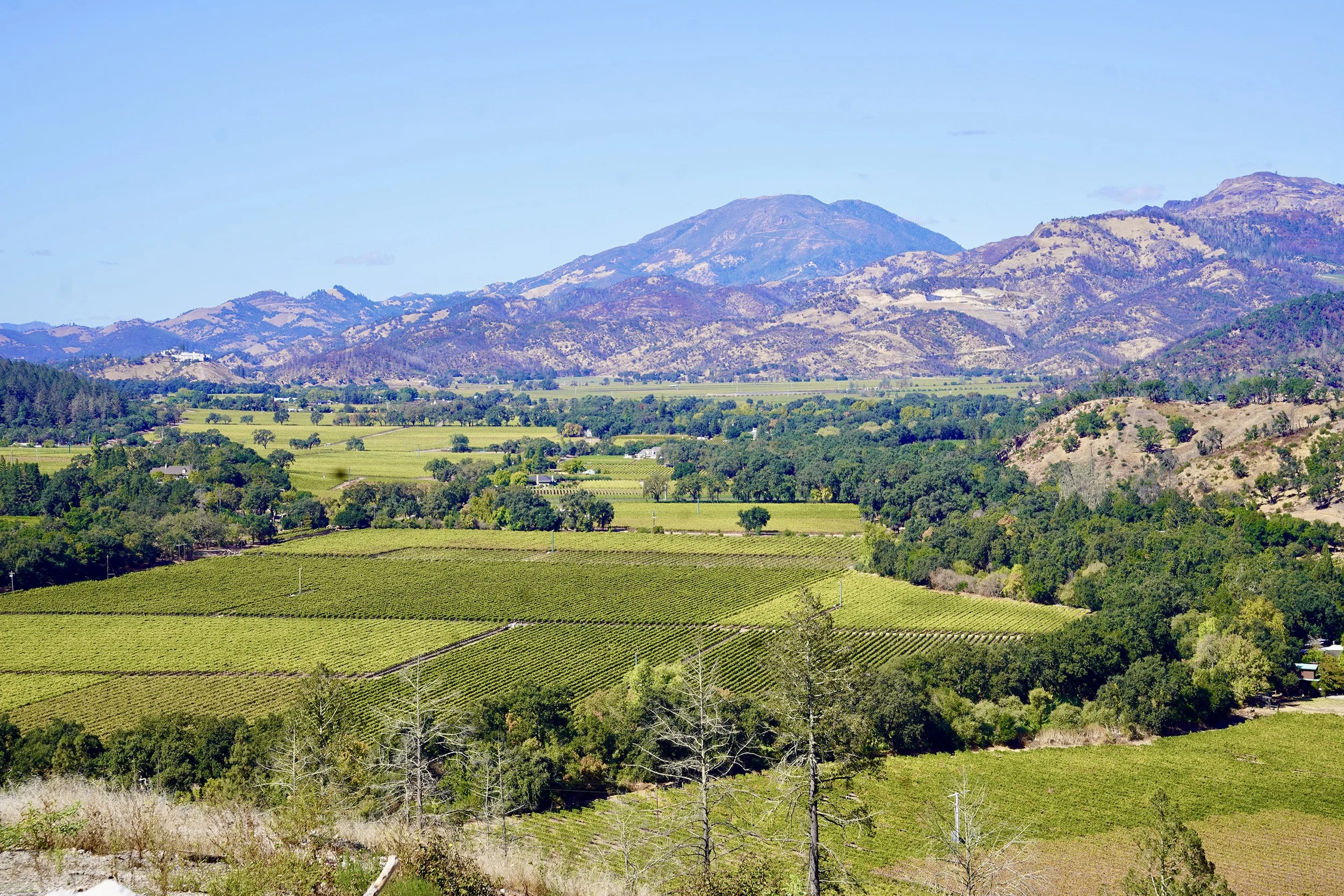
View of Mt. St. Helena with Duckhorn Vinyards in the foreground.
Restoring a Landscape and Belonging to the Land
Our family has been here for thirty years. We watched it burn. We stayed.
Not just to rebuild a house. To restore a landscape. To ask what it actually means to belong to a piece of ground rather than simply own it.
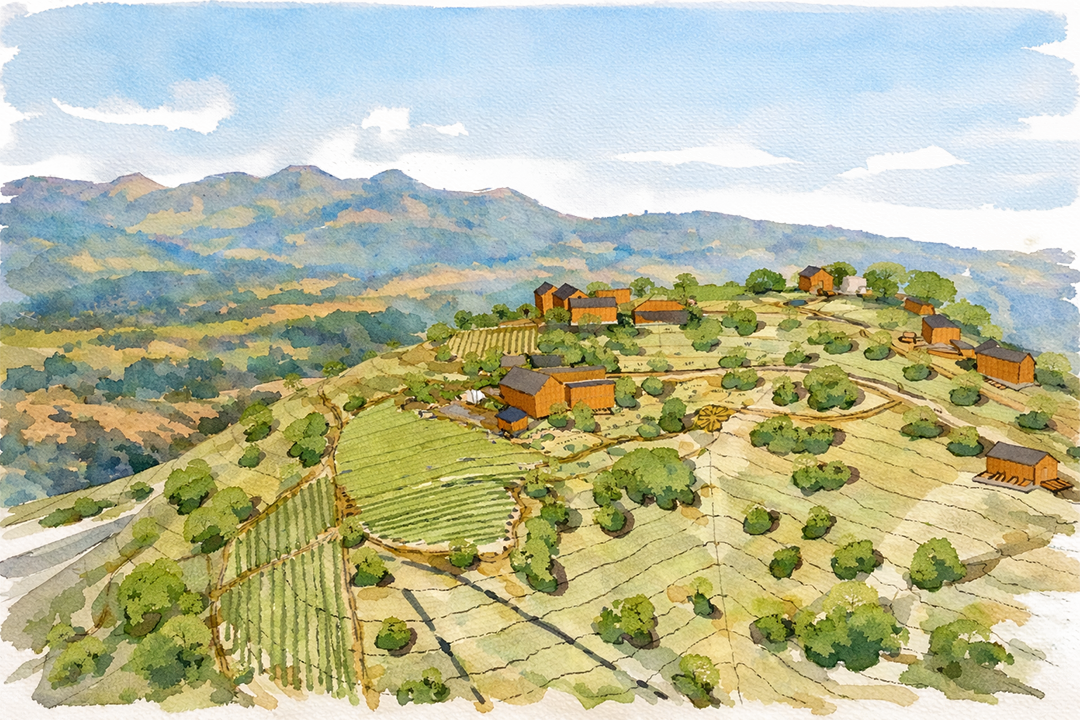
A century of fire suppression—standard practice at the time—let a conifer forest overtake much of the hills at the edge of the valley. The Glass Fire cleared them out in a night. Now the native oaks are coming back. Grasses are returning between them. Grazing animals work the understory. What you see taking shape is the oak savannah that existed here before suppression broke the old cycle.
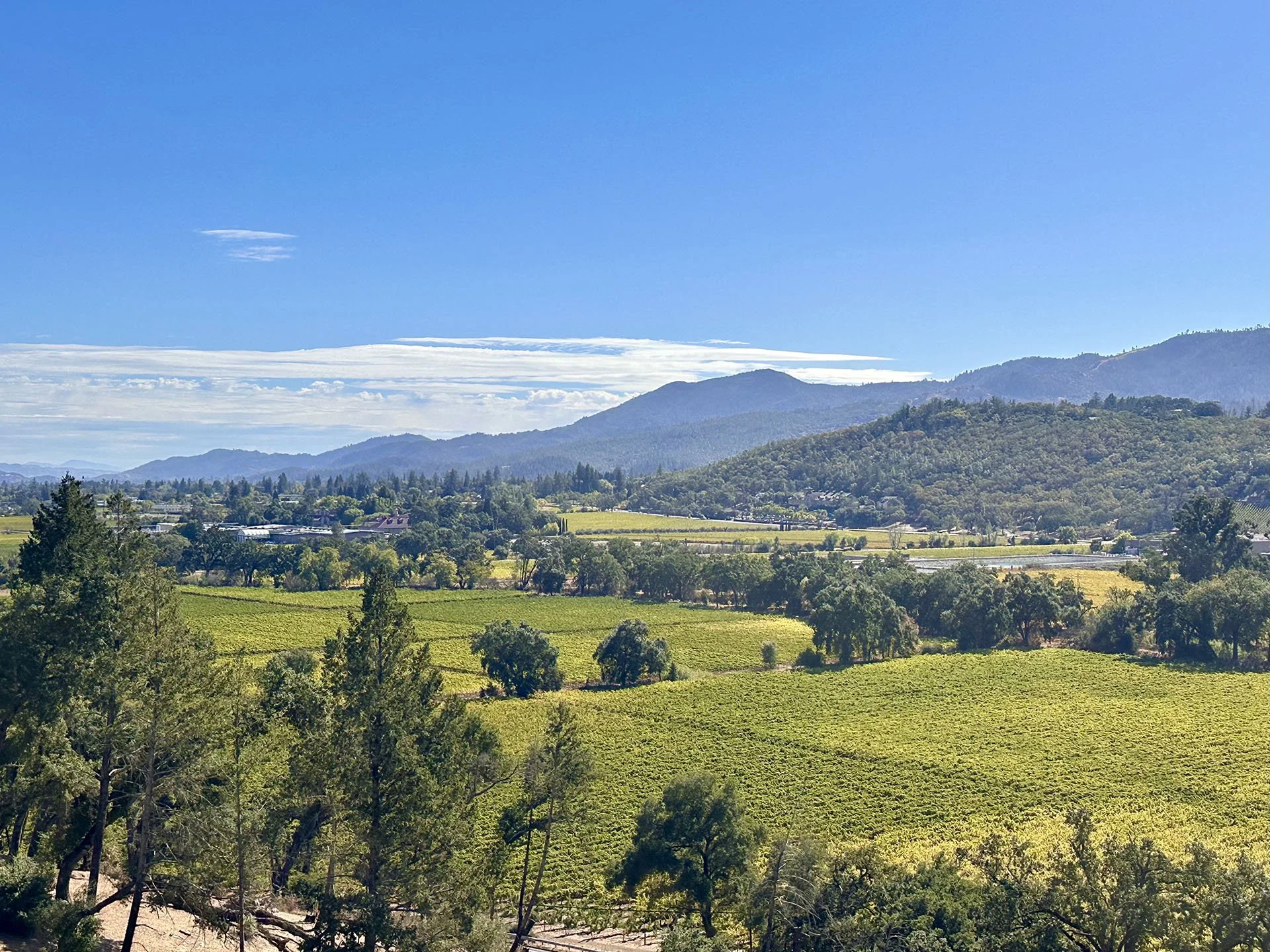
A Landscape of Obsidian and Vine
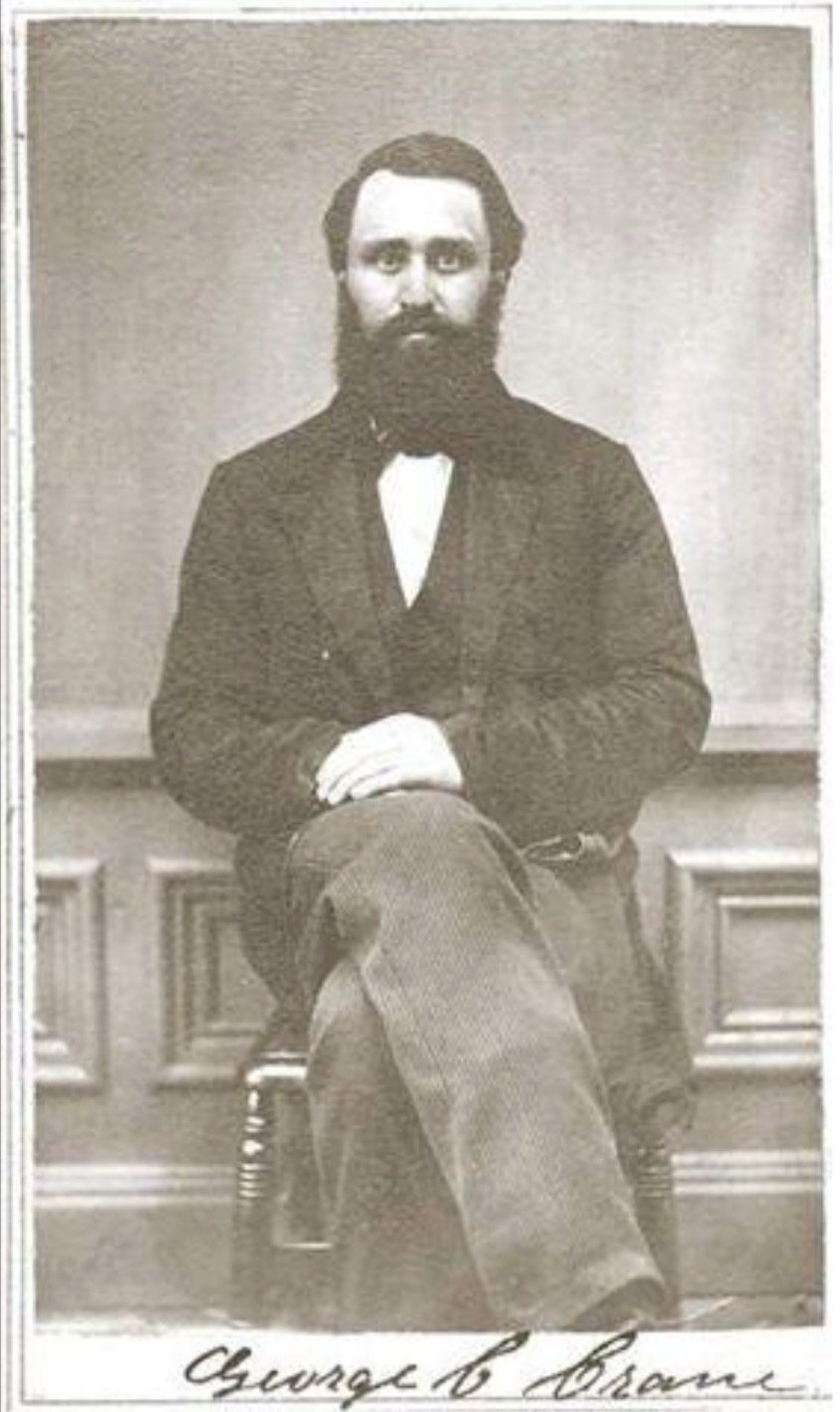
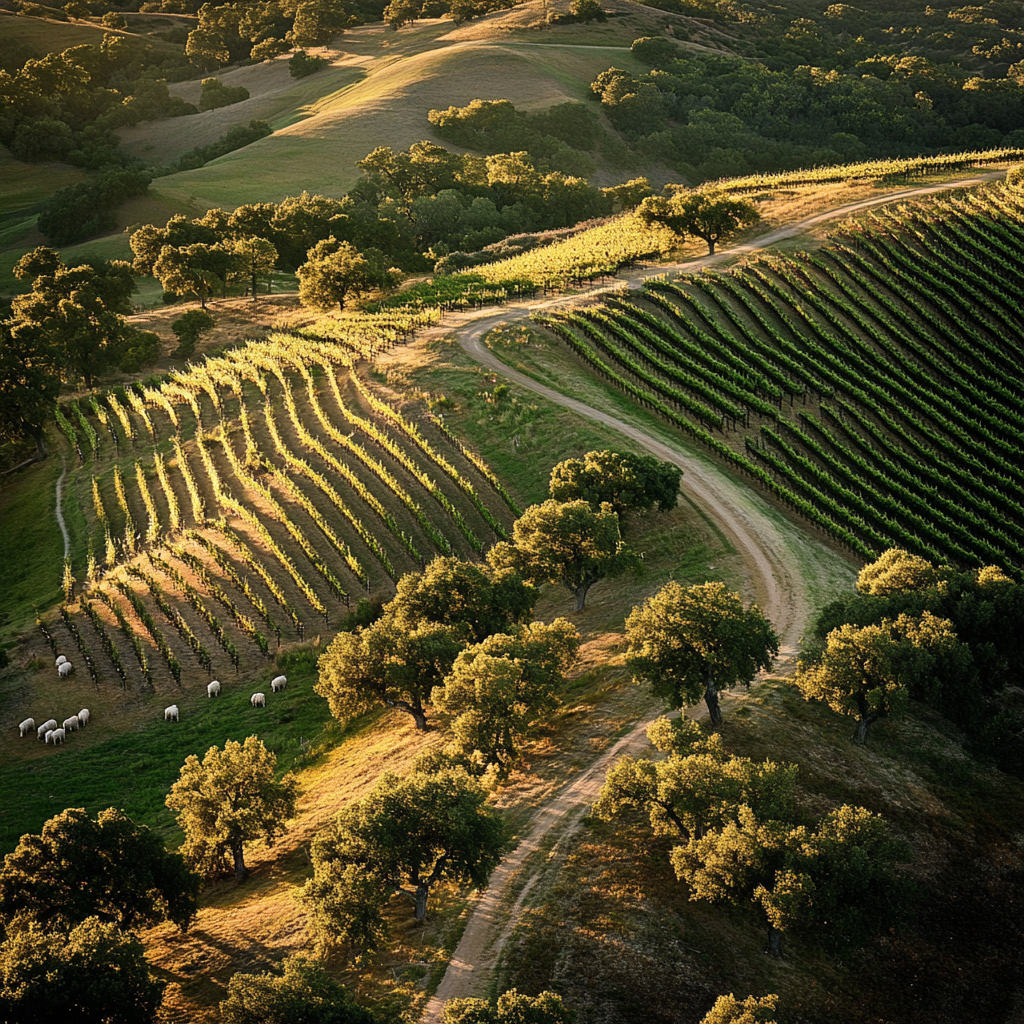
Dr. George Belden Crane originally planted his famed Dr. Crane Vineyard in 1860.
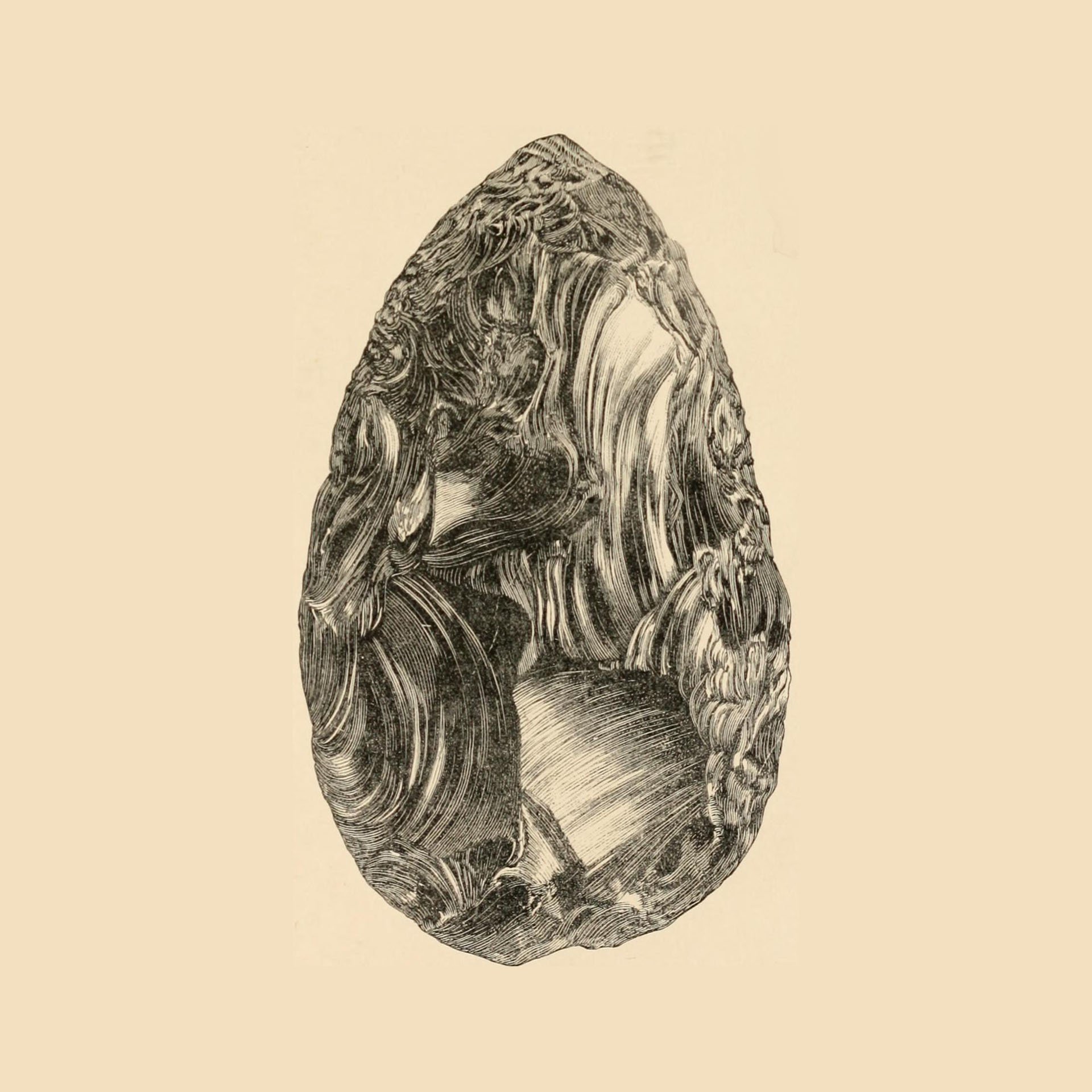
Obsidian from Glass Mountain was used by indigenous people for over 10,000 years.
The Wappo quarried obsidian from these slopes for ten thousand years. They worked the volcanic glass into blades and points that traveled trade routes from central Mexico to southeastern Idaho. Long before anyone understood terroir, people understood this ground held something worth the climb.
European settlers arrived in the nineteenth century and saw what the volcanic soils could do for grapes. The rocky terrain that made farming difficult made viticulture thrive. Vines struggle in this ground, and struggle makes concentrated fruit.
The obsidian still glitters after a hard rain. The Wappo knew what they had. The winemakers who arrived later figured it out too. The land has been proving its worth for a long time.
CULTURAL RESOURCES CONTEXT
Archaeological surveys conducted in 2025, with participation from the Mishewal-Wappo Tribe of Alexander Valley, documented extensive evidence of tool manufacturing across the project area. The density of obsidian debris—reportedly exceeding 50,000 flakes per cubic meter in some areas—reflects the scale and duration of quarrying activity. Archaeologists recorded 41 formed stone artifacts during the field survey; these were collected at the Tribe's request for proper disposition.
The Native American Heritage Commission's Sacred Lands File search returned a positive result for this property, indicating the presence of resources of spiritual or cultural importance.
The proposed vineyard and micro-winery development will proceed with archaeological and tribal monitoring, preconstruction surveys, cultural resources awareness training for construction crews, and protocols for artifact recovery and reburial. These measures reflect both regulatory requirements under the California Environmental Quality Act and the property owner's coordination with the Mishewal-Wappo Tribe.

What We Believe
Our relationship with land is defined over time by how we care for it.
A good trail matters. Not for exercise or property value but because walking your own ground changes how you see it. We have spent years building out the paths and roads that connect these parcels to each other. A place you can move through on foot becomes a place you actually know.
Land does not thrive simply by being left alone. The oaks coming back require management. The grasses need grazing. Fire risk demands attention every year, not once a decade. We have committed to the work of active stewardship because that is what this landscape asks of anyone who intends to stay.
None of this works without shared intent. Three or four households pulling in separate directions will exhaust themselves and each other. What we are looking for is alignment. A shared understanding of what this place should become and a willingness to build it together.
Private land stays private. We are not trying to create a compound or a commune. But the fences matter less than the agreement behind them. We want neighbors who see the same thing when they look at this country. Who understands that protecting it is not a burden but the whole point of being here.
Our Vision
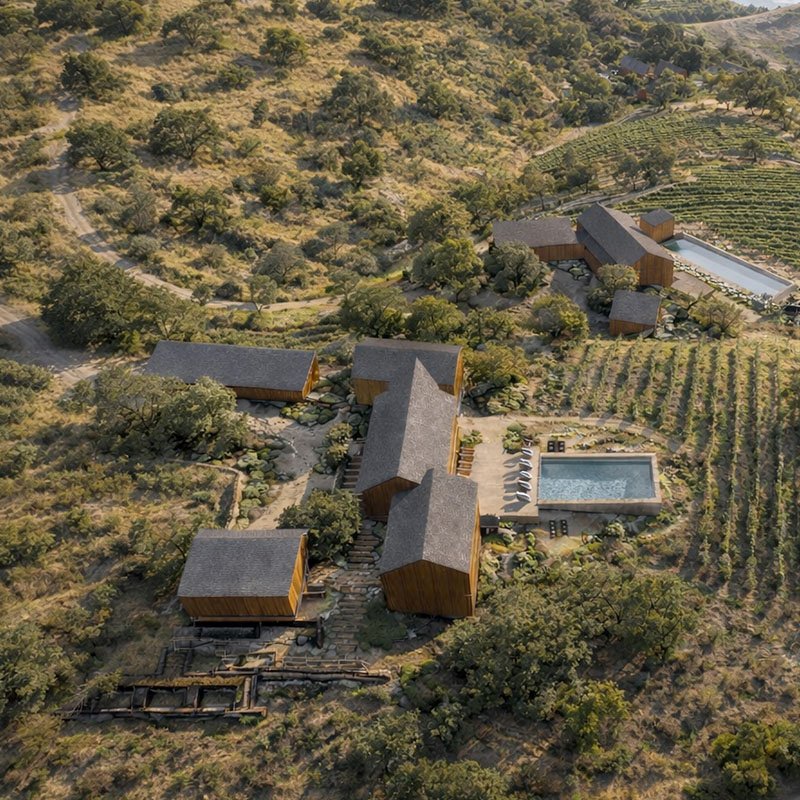
The families who join us here will carry forward the work that has already begun. Their children will walk trails through oak savannah that exists because someone made the choice to bring it back. Their grandchildren will drink wine from vines rooted in soil that remembers when this land was shaped by fire and molten rock.
That is the legacy. Not a plaque or a conservation easement or a line in an estate plan. Just land that is healthier than it was. A small community that knows how to take care of it. And the knowledge that you spent your years on something that will outlast you.
We have three parcels available for families who feel aligned with this vision. If this resonates with you, we invite you to continue the conversation.